Zaheed Kara

About me
I am an AI governance researcher based in London, UK.I'm a research scholar on GovAI's Risk Management Team. My current research focus is on loss of control, particularly from internal deployment of frontier AI, and incident reporting regimes.Before joining GovAI, I was an AI Safety Manager at the Frontier Model Forum, where I led the biosecurity and nuclear security work streams. I helped write some of the documents outlining consensus on safety frameworks for frontier AI.Before that, I was a senior research associate at the Centre for International Governance Innovation, a winter research fellow at GovAI, and a policy analyst in the Government of Canada.I received my M.A. in Global Public Policy and International Organizations from the Norman Paterson School of International Affairs, and my B.A. in honours political science with minors in French and sociology from McGill University.In my personal life, I play lots of different sports, most frequently volleyball and soccer. I sing and play the guitar, and occasionally write poetry. I also recently started doing improv comedy, which observers have commented that I've taken to like a fish to land.
Publications
Models for International Private Sector Cooperation on Frontier AI Safety
Conor McGlynn, Saad Siddiqui, Bruce Tsai, B.A. Bacigal, Jeffrey Ding, Robert Trager, Zaheed Kara, Koen Holtman, Huw Roberts, Nora von Ingersleben-Seip, Matt White (2026)This paper examines options to facilitate private sector cooperation on frontier AI safety based on expert interviews and case studies of international private sector cooperation in other sectors.
Embedded Assessments for Frontier AI
Jacob Charnock, Sophie Williams, Zaheed Kara, Markus Anderljung, Alejandro Tlaie Boria, Stephen Casper, Anka Reuel, Jonas Freund (2026)This paper discussed embedded assessments for frontier AI, which would give independent evaluators employee-like access to a developer’s internal systems, staff, and documentation. We examine seven design questions (about scope, information gathering, duration, timing, terms of engagement, disclosure, and escalation) and make recommendations for how they should be designed as a starting point for industry best practice.
Improving Frontier AI Incident Reporting Regimes
Zaheed Kara (2026)This policy brief describes ways in which current incident reporting requirements fall short and makes recommendations on how they could be updated to ensure that future similar incidents are identified and can be learned from.
Technical Safeguards Against Extreme Misuse of AI: Current Landscape and Future Directions
Isabella Duan, Edward Kembery, Stephen Casper, Zhikai Chen, Jasper Götting, Geng Hong, Zaheed Kara, Lijun Li, Xiaojian Li, Kellin Pelrine, Ziyue Wang, Jia Xu, Ziwei Xu, Zhiyuan Zeng, James Zhang, Jie Zhang (2026)This report maps five current misuse safeguard practices across three levels: two model-level interventions (pre-training data filtering, and post-training techniques), two deployment-level interventions (monitoring and access control), and one governance-level intervention (pre-deployment evaluations) that informs deployment decisions (including release conditions and safeguard design) and supports their ongoing refinement thereafter.
Frontier AI and Nuclear Security
Zaheed Kara (2026), for the Frontier Model ForumBased on extensive engagement with the nuclear security community, this research update aims to inform greater understanding of those risks and establish a foundation for future collaboration on frontier AI risk management between the frontier AI and nuclear security communities.
Artificial Intelligence and Nuclear Security Governance: Addressing the Risks of Frontier AI
Dr. Sarah Case Lackner & Zaheed Kara (2025)Advanced AI models and systems are rapidly changing the landscape of threats. This report considers at a high level how frontier AI could enhance existing adversary capabilities in carrying out threats to nuclear facilities, focusing in particular on three phases of an attack: target selection, attack planning and skill building, and execution.
Artificial Intelligence Models and Systems
Dr. Sarah Case Lackner & Zaheed Kara (2025)Aimed at policymakers and diplomats focused on nuclear security, this brief provides a concise introduction to AI models and systems. It discusses the origin and development, beneficial use cases, shortcomings and vulnerabilities, and potential future developments in the field that may have implications for policymakers and diplomats.
Preliminary Taxonomy of AI-Bio Misuse Mitigations
Zaheed Kara (2025), for the Frontier Model ForumThis issue brief presents a preliminary taxonomy of safeguards designed to reduce the risk of biological misuse stemming from access to frontier AI models. Drawing from discussions with experts within the Frontier Model Forum (FMF) and the broader biosafety and biosecurity communities, this brief outlines the current landscape of AI-bio misuse safeguards, identifies potential future approaches to mitigations, and underscores the importance of implementing societal-level measures as a complement to technical safeguards.
Frontier AI Biosafety Thresholds
Zaheed Kara (2025), for the Frontier Model ForumBased on expert discussions among Frontier Model Forum (FMF) member firms and the wider biosafety community, this issue brief highlights emerging industry consensus on a core biosafety threshold for frontier AI. In addition to specifying the point at which an AI model’s capabilities in biological domains may require further assessments and/or enhanced safeguards, it also provides initial guidance for evidence-based threshold determinations.
Preliminary Reporting Tiers for AI-Bio Safety Evaluations
Zaheed Kara (2025), for the Frontier Model ForumThis issue brief outlines a three-tiered approach to responsible reporting that aims to attend to both the benefits of greater transparency and the potential risks associated with information and attention hazards. Drawn from expert discussions held by the Frontier Model Forum (FMF), the approach reflects preliminary thinking across FMF member firms about what information from safety evaluations should be shared with the public at large, what should be disclosed within trusted expert networks only, and what should be kept private.
Thresholds for Frontier AI Safety Frameworks
Zaheed Kara (2025), for the Frontier Model ForumThis issue brief seeks to advance and inform public understanding of frontier AI thresholds. Drawing on insights from experts within the FMF as well as the broader AI safety and security community, this brief elaborates on the importance of thresholds for frontier AI safety frameworks and outlines the different types of thresholds that have been proposed.
Preliminary Taxonomy of AI-Bio Safety Evaluations
Zaheed Kara (2024), for the Frontier Model ForumThis issue brief offers an initial taxonomy and definitions for frontier AI safety evaluations specific to the biological domain, categorized across two dimensions: methodology and domain. Based on input from FMF member firm experts, in addition to a diverse group of external experts from the advanced AI and biological research fields, this brief aims to document and build a preliminary consensus around the current understanding of frontier AI-bio safety evaluations.
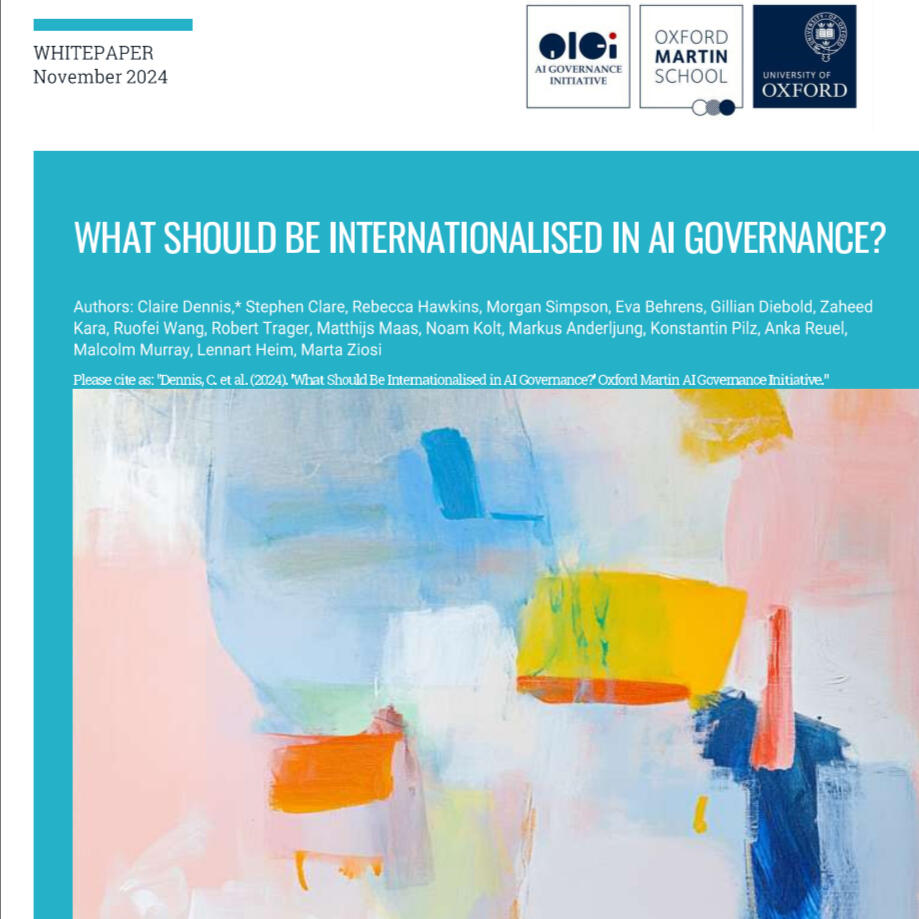
What Should Be Internationalized in AI Governance?
Claire Dennis, Stephen Clare, Rebecca Hawkins, Morgan Simpson, Eva Behrens, Gillian Diebold, Zaheed Kara, Ruofei Wang, Robert Trager, Matthijs Maas, Noam Kolt, Markus Anderljung, Konstantin Pilz, Anka Reuel, Malcolm Murray, Lennart Heim, Marta Ziosi (2024)As AI advances, states increasingly recognise the need for international governance to address shared benefits and challenges. This paper presents a novel framework to identify and prioritise AI governance issues warranting internationalisation.
Components of Frontier AI Safety Frameworks
Zaheed Kara (2024), for the Frontier Model ForumDrawn from the Frontier AI Safety Commitments as well as published member firm frameworks and expert input, this piece outlines a preliminary consensus among member firms about how to structure frontier AI safety frameworks.
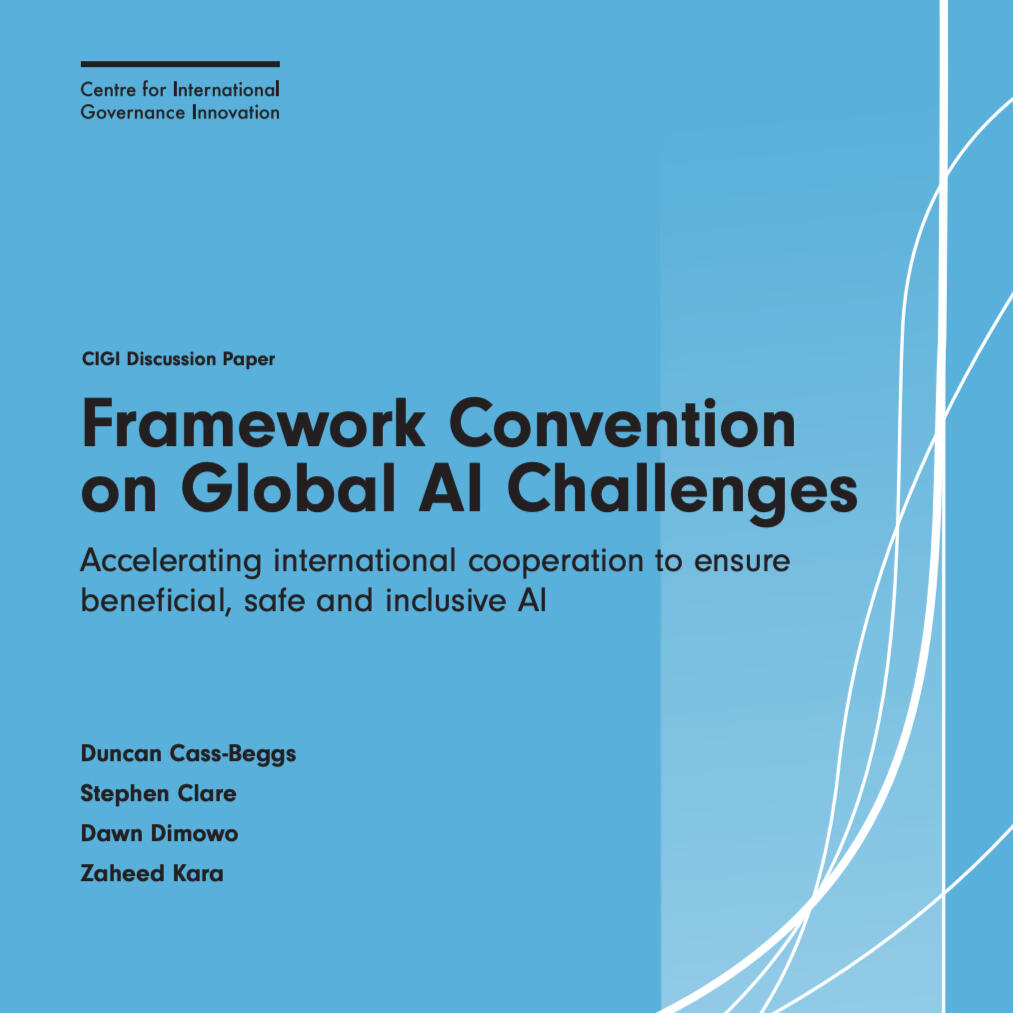
Framework Convention on Global AI Challenges
Duncan Cass-Beggs, Stephen Clare, Dawn Dimowo, Zaheed Kara (2024)This discussion paper explores three emerging global-scale challenges posed by advanced AI that could require international cooperation: realizing the global benefits of AI, mitigating the global risks and making legitimate choices about future implications of AI for humanity. The paper draws on existing research and policy efforts, as well as valuable discussions and feedback from many quarters, and proposes the development of an international Framework Convention on Global AI Challenges.
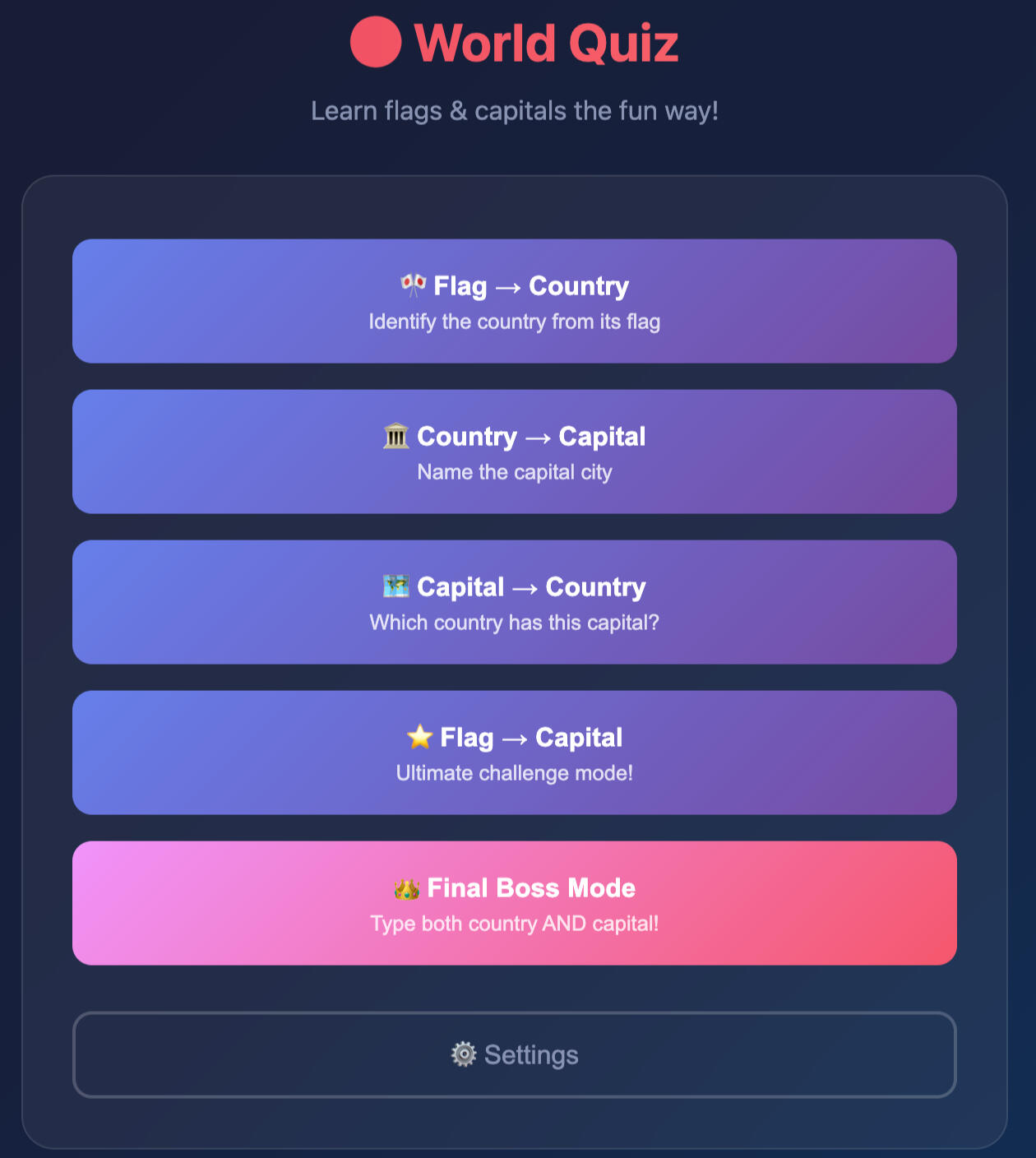
Flag Quiz
Think you know your flags? Or want to improve your knowledge of world flags? Click here to play!

Poetry or No-etry
See how well you can identify which poems are written by a professional, AI, or me!